What is a COMS? Navigating the World with an Orientation & Mobility Specialist
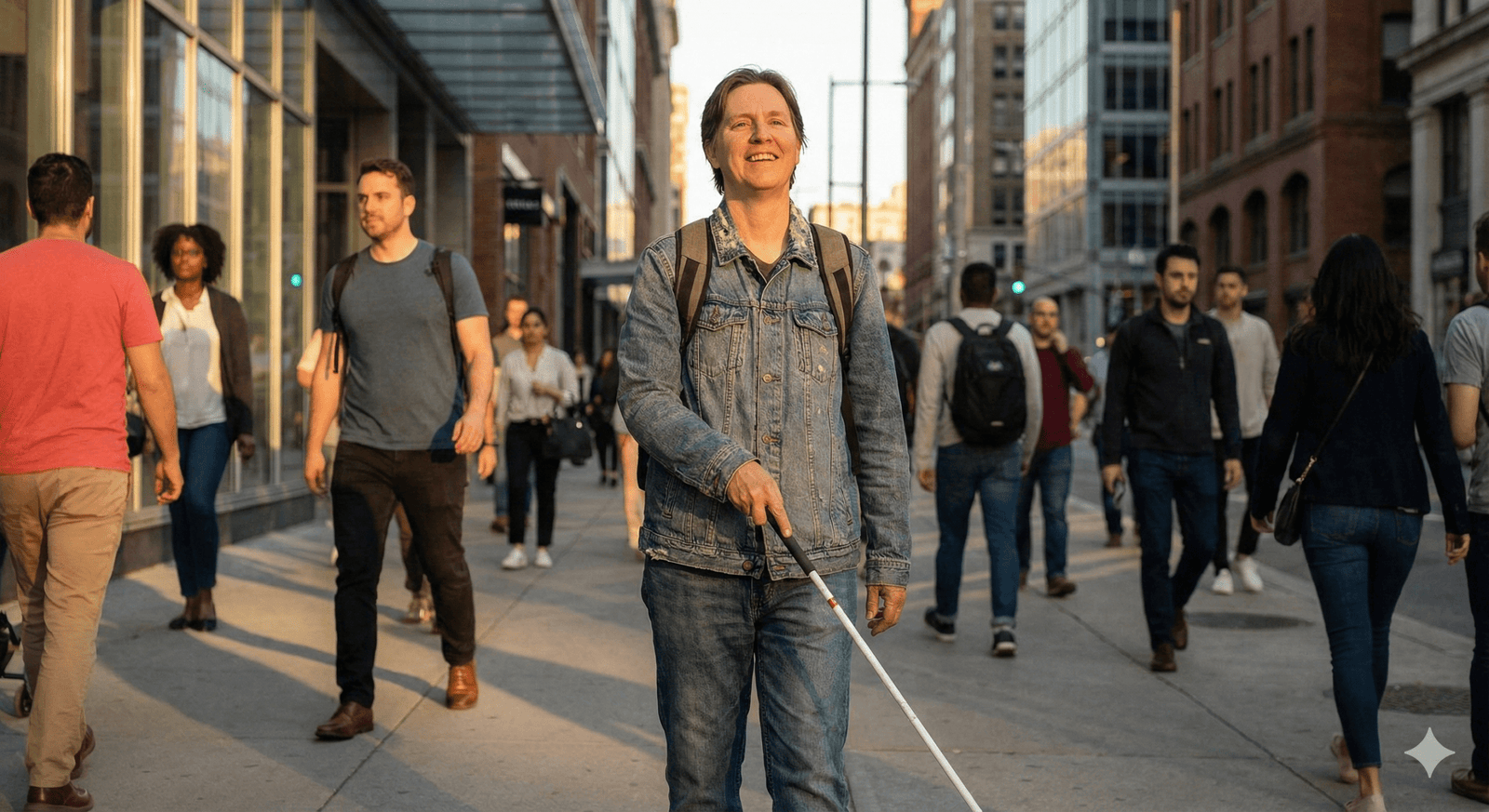
We all want to move through the world free, whether that is walking to the mailbox, navigating a busy office, or taking public transit. However, when you are living with Blindness Rehabilitation Service Providers/ Resourcesor blindness, certain environments can present unique challenges.
But here is the good news: You don’t have to figure out every solution on your own.
There is a professional dedicated to helping you analyze your environment and find the best, safest way to navigate it. They are called a Certified Orientation and Mobility Specialist (COMS).
Who Are They?
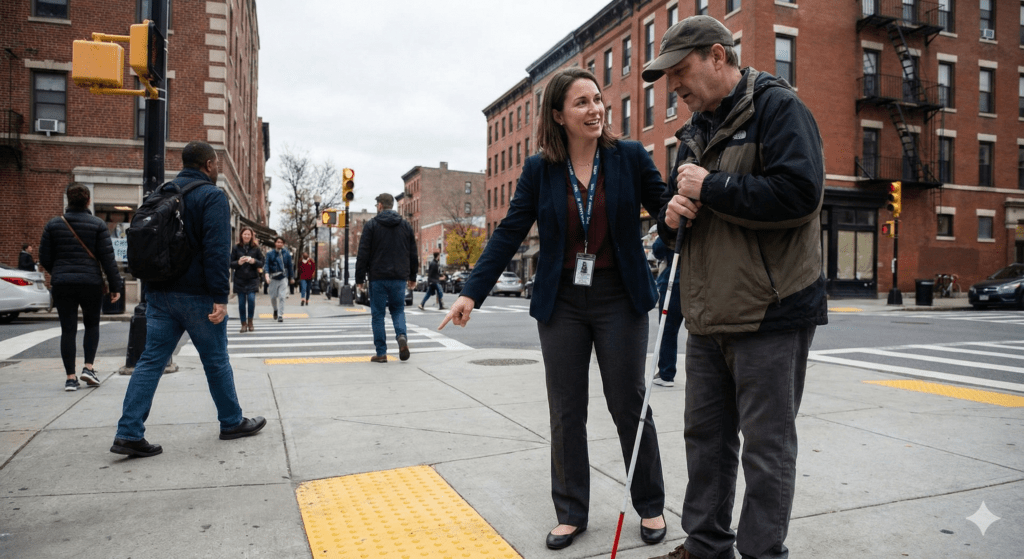
A COMS is a university-trained professional who specializes in independent travel for individuals with visual impairments.
Think of them as a strategist for your mobility. They understand deeply how vision loss affects movement, and they know the full range of tools available to help. Their job is not to dictate how you live, but to assess your specific situation and recommend the right techniques to keep you safe and efficient.
Expert Guidance for Your Unique Needs
A COMS does not use a “one size fits all” lesson plan. Instead, they look at where you are now and where you want to be.
You might already be travelling independently, or you might already use a white cane. A COMS helps you fine-tune those skills through specific training areas:
- Personalized Assessment: They look at your specific routes and routines. If you are struggling with one specific intersection, a dark stairwell, or a new pathway at work, they help you problem-solve that exact area.
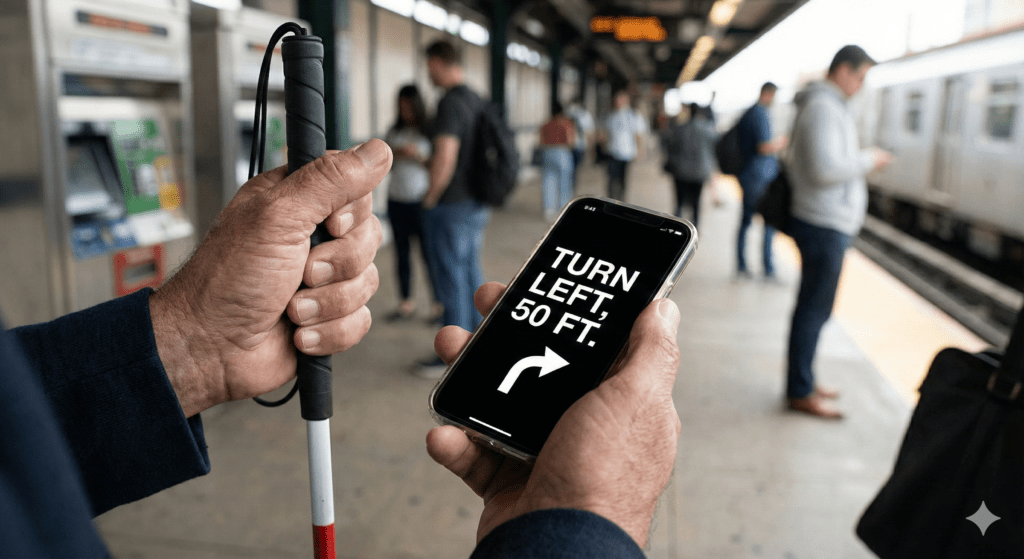
- Selecting the Right Tools: From different types of white cane tips to advanced GPS apps and electronic travel aids, a specialist helps you figure out which tools actually add value to your life—and which ones you don’t need.
- Safety Checks: Even confident travelers can miss subtle risks. A COMS can spot safety issues you might miss, such as how to position yourself so cars can see you better, or how to detect drop-offs more continuously.
- Sensory Awareness: They help you confirm that you are interpreting the sounds, textures, and echoes of your environment correctly, giving you extra reassurance.
COMS vs. CLVT: What is the Difference?
This is a very common question. These two professionals often work together, but they focus on different aspects of your life.
- COMS (Orientation & Mobility Specialist): Focuses on movement. They help you navigate the larger environment (getting from Point A to Point B safely).
- CLVT (Certified Low Vision Therapist): Focuses on tasks. They help you use your remaining vision for daily activities (reading, cooking, lighting management, or using a computer).
Frequently Asked Questions
“Do I have to be totally blind to see a specialist?”

No. Most people who consult with a COMS have low vision (some remaining sight). The specialist helps you use that remaining vision more effectively. For example, they might teach you to scan for high-contrast landmarks to keep your bearing while walking.
“Will using a white cane make me look vulnerable?”
Many people fear this, but it is actually a tool of empowerment. A white cane serves two critical purposes:
- It scans the ground for obstacles so you don’t trip.
- It signals to drivers and pedestrians to give you space and respect. It puts you in control of your safety rather than relying on others to watch out for you.
How to Find a Specialist
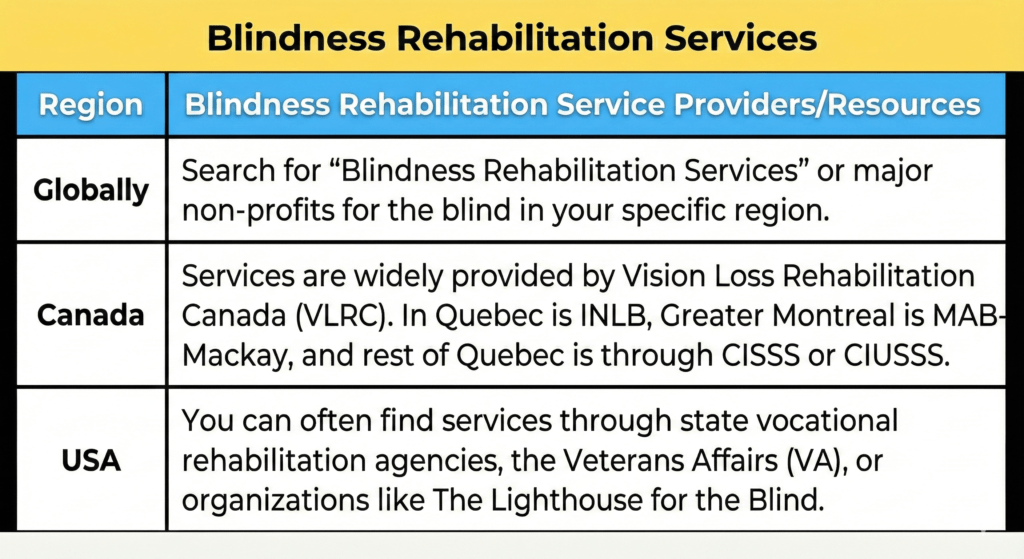
In many countries, these services are funded by the government or charitable organizations to ensure people remain independent.
- Globally: Search for “Blindness Rehabilitation Services” or major non-profits for the blind in your specific region.
- In Canada: Services are widely provided by Vision Loss Rehabilitation Canada (VLRC). In Quebec is INLB, Greater Montreal is MAB-Mackay, and rest of Quebec is through CISSS or CIUSSS
- In the USA: You can often find services through state vocational rehabilitation agencies, the Veterans Affairs (VA), or organizations like The Lighthouse for the Blind.
Are you reading this to help a parent, partner, or friend? What is the biggest concern you have about their safety or independence right now? Drop a comment below—your questions help me write future posts.