
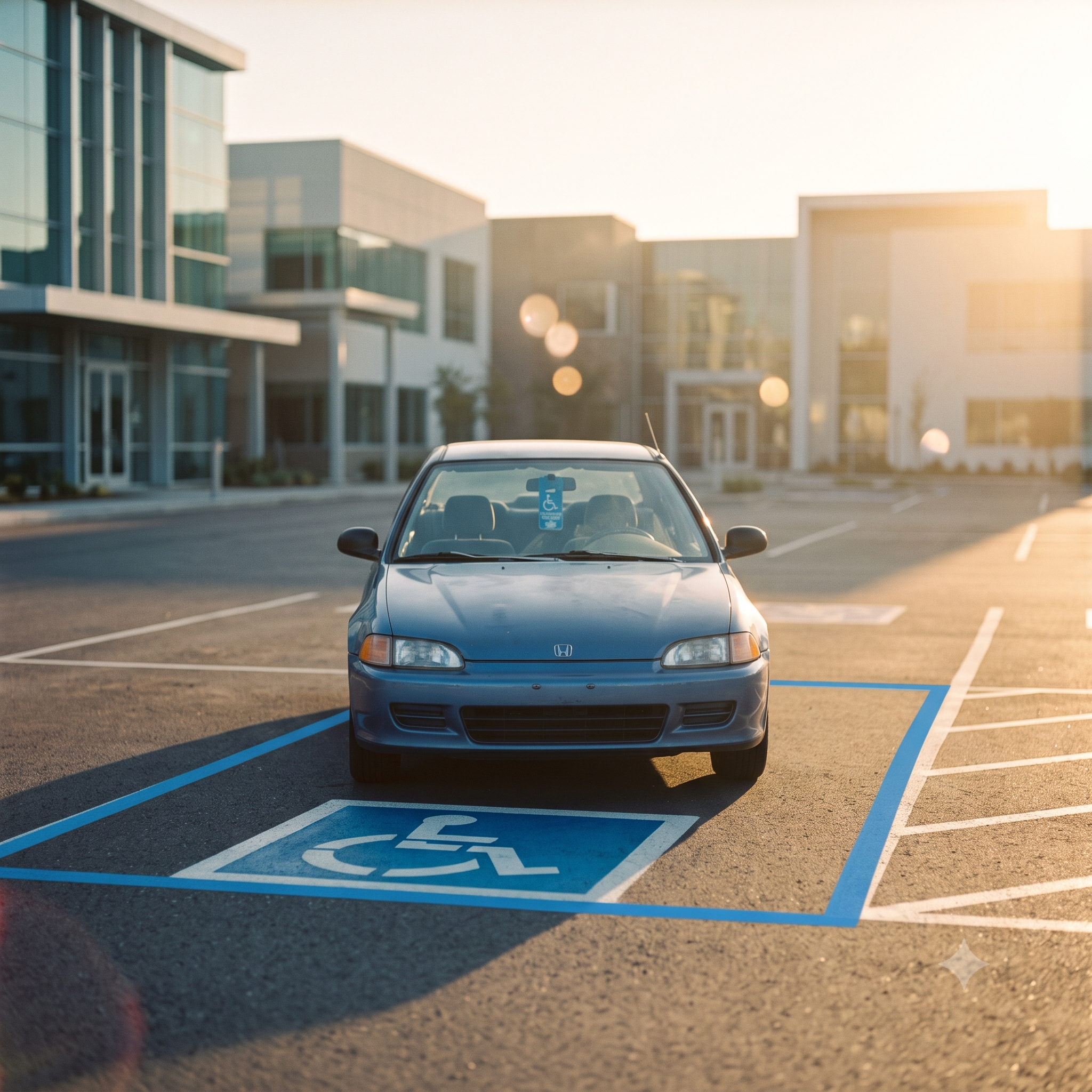
Does Low Vision Qualify You for a Disability Parking Permit? (US, Canada, UK & Australia)
Last fact-checked: July 2026. Eligibility rules — are actively under review, so always confirm current requirements with your local permit-issuing authority.
If you or someone you love has low vision, you’ve probably wondered whether that alone is enough to qualify for a disability parking permit — and whether “low vision” even counts the same way as being “legally blind” does on an application form.
The short answer: it depends on where you live, and the difference between “low vision” and “legally blind” matters a lot more than most people realize. In some places, low vision alone is enough. In others, you need to meet the stricter threshold of legal blindness. And in at least one Canadian province, people with vision loss are currently excluded from the program altogether.
This guide breaks down the real eligibility criteria — not general assumptions — for the US, Canada, the UK, and Australia, so you know exactly where you stand before you apply.
Low Vision vs. Legal Blindness: Why the Distinction Matters Here
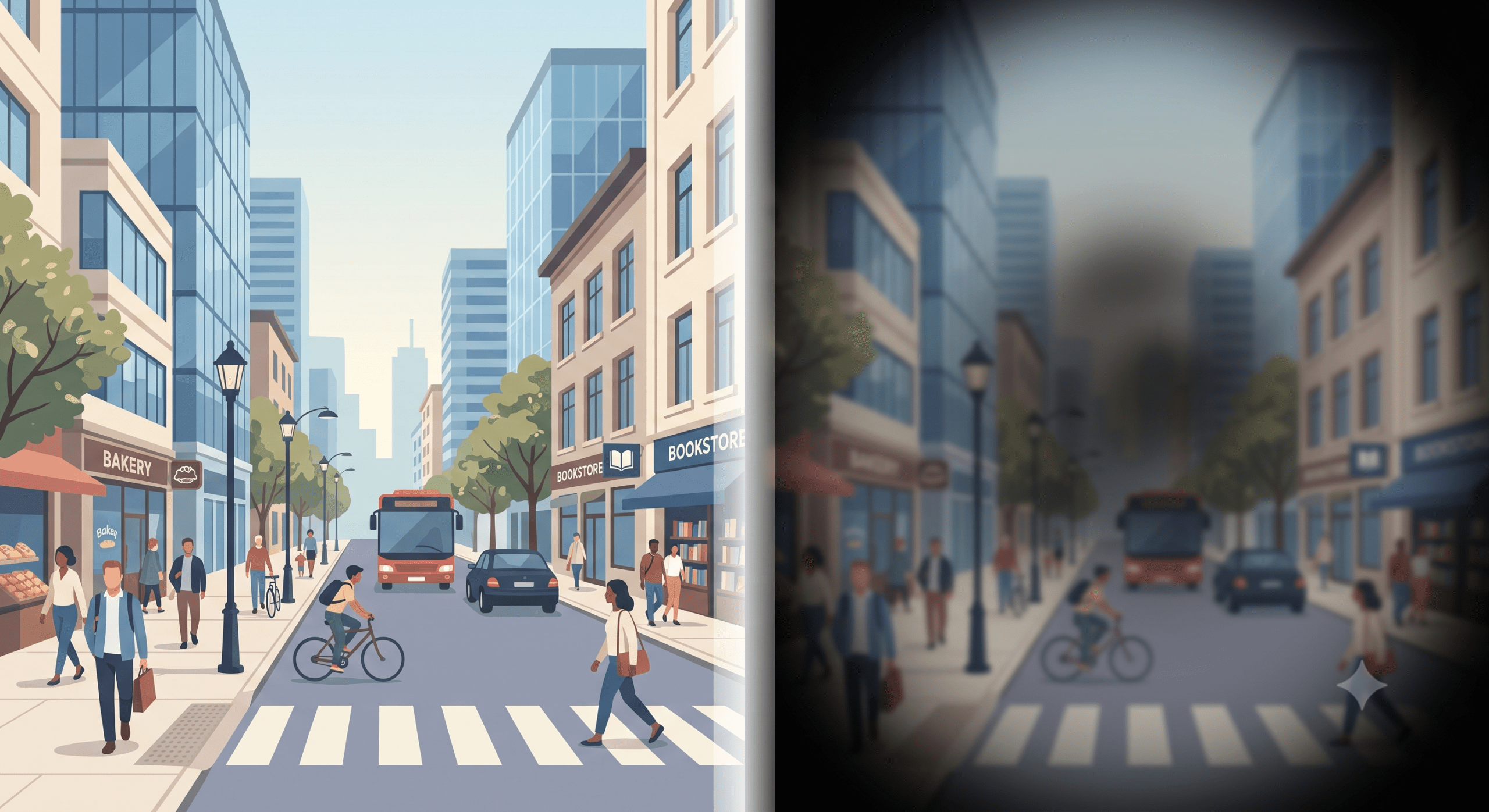
Before looking at any specific country, it helps to understand the two terms that permit programs actually use:
- Low vision describes any level of vision loss that can’t be fully corrected with glasses, contacts, or medication, but doesn’t necessarily meet the legal definition of blindness. This includes conditions like macular degeneration, diabetic retinopathy, and glaucoma at earlier or moderate stages.
- Legal blindness is a specific, measurable threshold: usually visual acuity of 20/200 or worse in the better eye with correction, or a visual field of 20 degrees or less in diameter.
Here’s the key point: most parking permit programs are written around the legal blindness threshold, not “low vision” as a general category. If your vision loss doesn’t yet meet that specific measurement, you may need a different route to qualify — one based on how vision loss affects your mobility and safety, rather than the diagnosis itself.
Your optometrist, ophthalmologist, or low vision specialist can tell you exactly where your vision falls on this scale, and that documentation is almost always required for any application.
United States
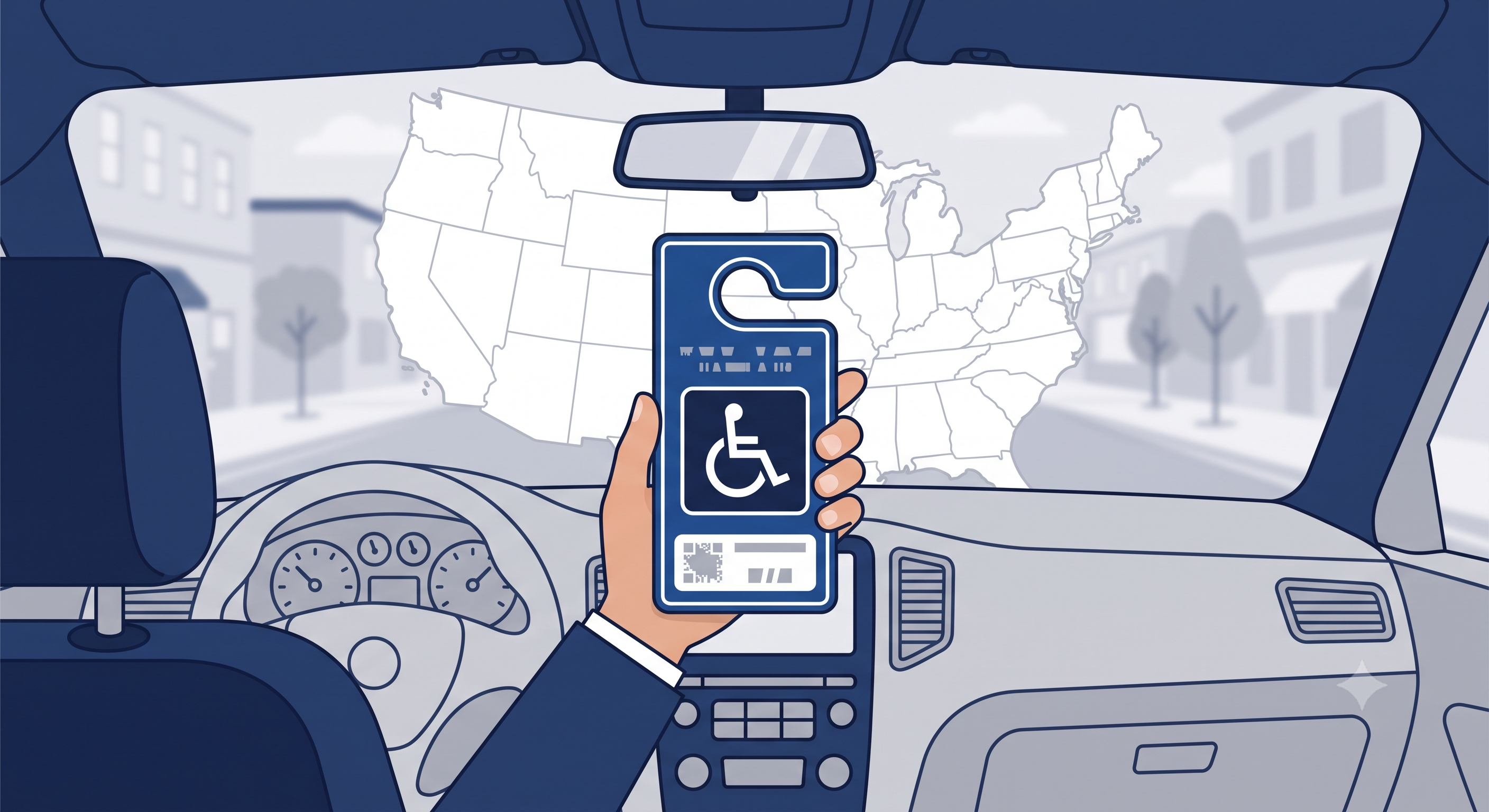
Most US states use a consistent standard for vision-related eligibility: a visual acuity of 20/200 or less in the better eye with corrective lenses, or a visual field of 20 degrees or less. This is often described as “legal blindness,” and it’s a recognized qualifying condition in the majority of states.
A few things worth knowing:
- You don’t need to be a driver to qualify — permits are equally valid for passengers with low vision, which matters if someone else drives you.
- Some states also give discretion to consider limited night vision or other functional vision issues, even if you don’t meet the strict 20/200 threshold, but this varies significantly.
- Applications require certification from a licensed physician, optometrist, or other qualified provider, submitted to your state’s DMV or equivalent agency.
- Because rules differ by state, always confirm the specific threshold and required form with your state’s DMV before applying. If you’re in California, for example, you can review the exact form and requirements on the California DMV’s disabled person placard page.
Canada
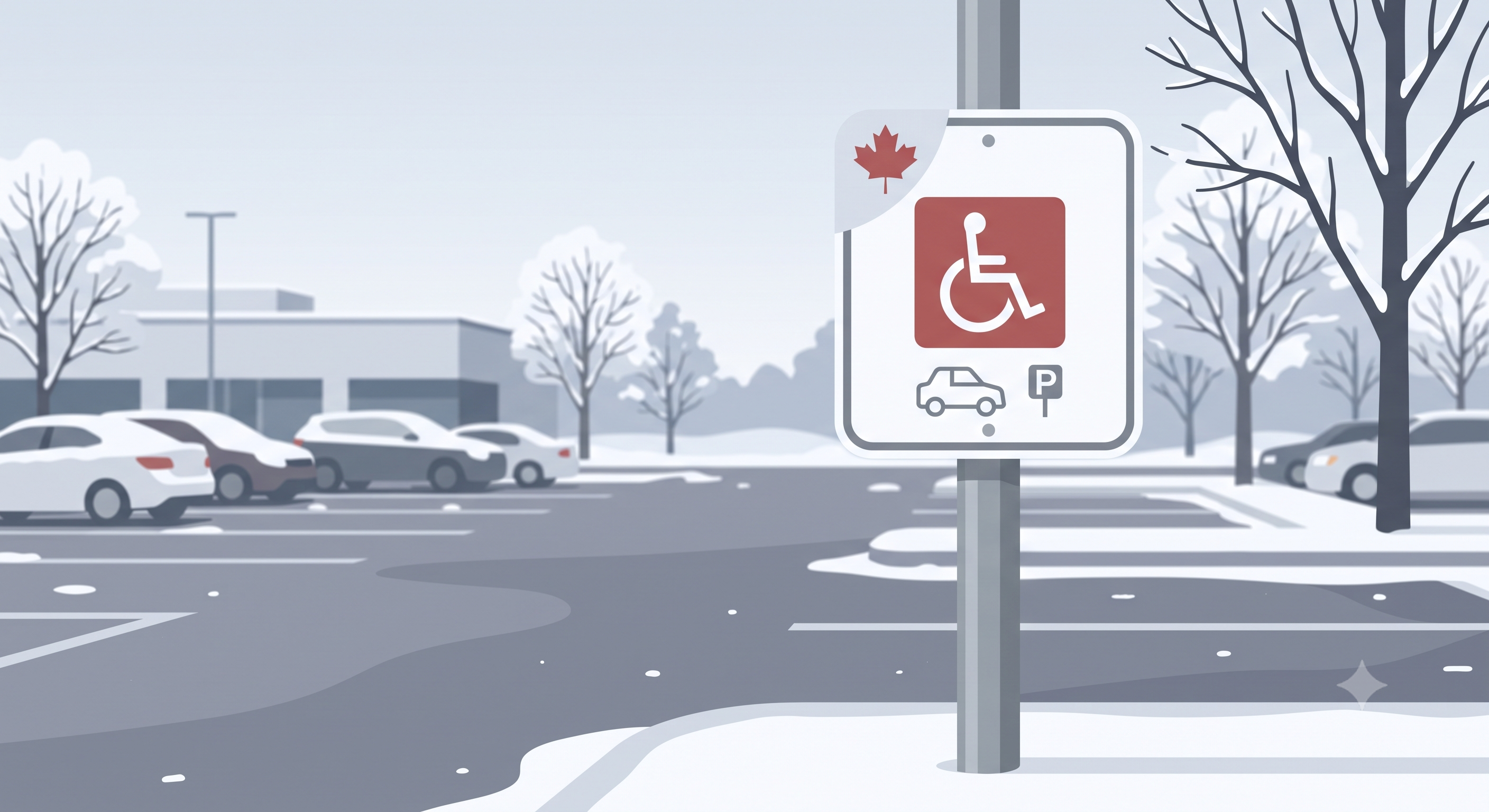
Parking permits in Canada are managed provincially, not federally, which means the rules — and how well they serve people with low vision — vary a lot more than most people expect.
Ontario, British Columbia, Quebec, Nova Scotia, Newfoundland and Labrador, and Yukon generally follow criteria similar to the US: visual acuity of 20/200 or poorer in the better eye with correction, or a visual field of 20 degrees or less, qualifies you for an accessible parking permit. In Ontario specifically, this is written directly into the regulations under the Highway Traffic Act, and certification can come from a physician, nurse practitioner, physiotherapist, occupational therapist, chiropractor, chiropodist, or podiatrist. You can review the full eligibility criteria and application steps on Ontario’s official Accessible Parking Permit page.
Parking permits in Canada are managed provincially, not federally, which means the rules — and how well they serve people with low vision — vary a lot more than most people expect.
Ontario, British Columbia, Quebec, Nova Scotia, Newfoundland and Labrador, and Yukon generally follow criteria similar to the US: visual acuity of 20/200 or poorer in the better eye with correction, or a visual field of 20 degrees or less, qualifies you for an accessible parking permit. In Ontario specifically, this is written directly into the regulations under the Highway Traffic Act, and certification can come from a physician, nurse practitioner, physiotherapist, occupational therapist, chiropractor, chiropodist, or podiatrist. You can review the full eligibility criteria and application steps on Ontario’s official Accessible Parking Permit page.
Alberta recently reversed a long-standing exclusion. Until June 30, 2026, Alberta’s disability parking placard program explicitly excluded sensory impairments — including blindness, deafblindness, and low vision — from eligibility, making it the only province with this gap. Following sustained advocacy from CNIB, the Alberta government expanded eligibility effective immediately on that date: vision loss that substantially limits safe, independent mobility while navigating parking areas is now a recognized qualifying category alongside existing mobility-based criteria. Applications still require sign-off from a medical professional, and this change is described as the first phase of a broader modernization of the province’s placard program. If you’re in Alberta, check alberta.ca’s parking placard page for current application details. To read more about Canada policies in each province click here.
A few practical notes for Canada overall:
- Permits are generally recognized across provinces and territories, and Canada also recognizes valid US and European permits for visitors.
- Fees, permit duration, and renewal requirements vary by province — check your provincial transportation ministry’s website for specifics.
- If you’re in Alberta and rely on a support person or caregiver who drives you, it may be worth exploring whether your caregiver or household qualifies through a different condition, or connecting with CNIB for updates on advocacy efforts.
United Kingdom
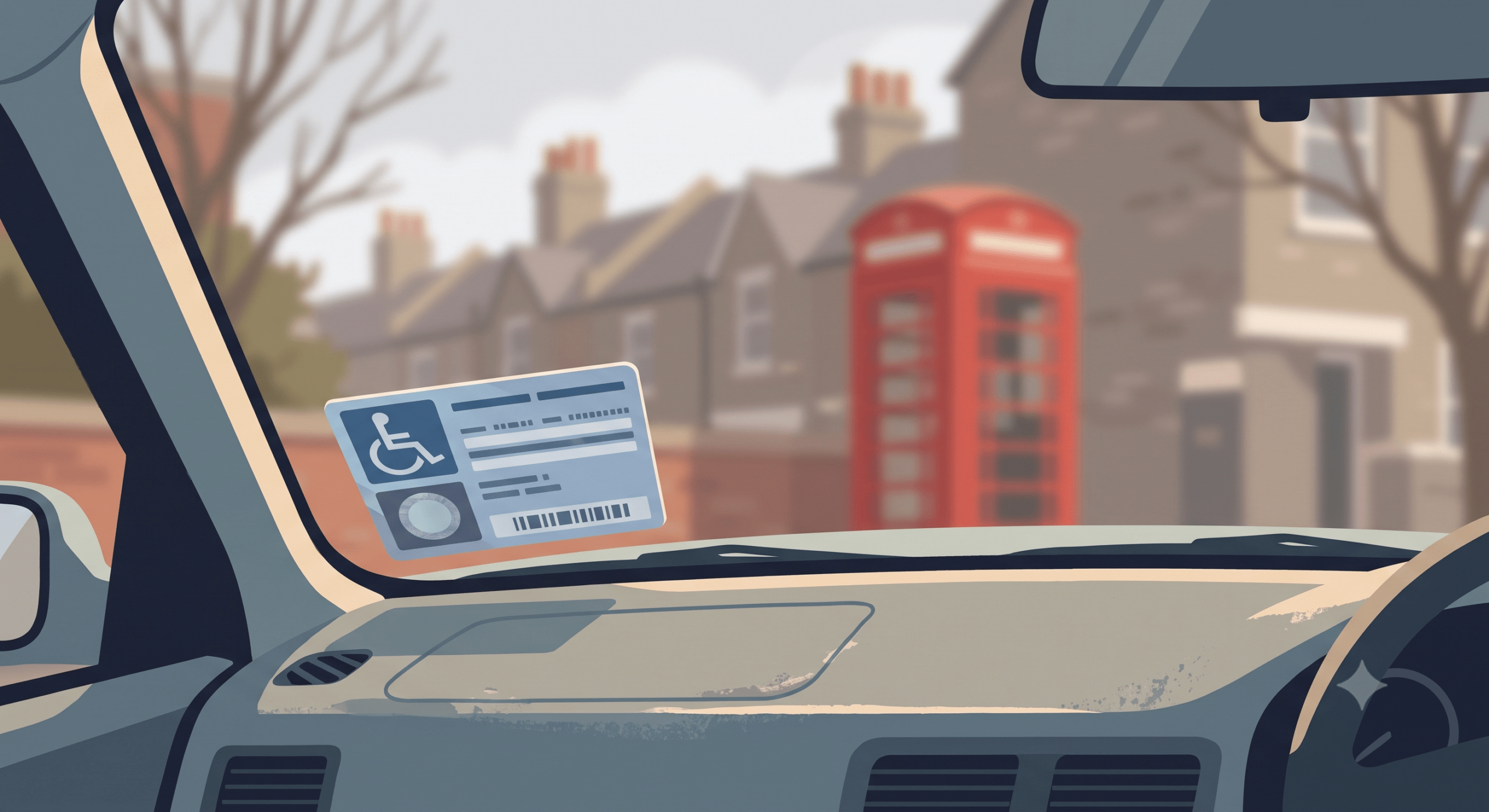
The UK’s Blue Badge scheme draws a firmer line between “blind” and “partially sighted” than the US or Canada do.
- If you’re registered as severely sight impaired (blind) — confirmed through a Certificate of Vision Impairment (CVI) from your ophthalmologist — you automatically qualify for a Blue Badge without further assessment, when travelling as a passenger.
- If you’re partially sighted (sight impaired) but don’t meet that threshold, you don’t automatically qualify. You can still apply, but you’ll need to complete an additional section of the application demonstrating how your vision loss affects your mobility, and your case may go through further assessment by your local council.
This means low vision that hasn’t reached the “severely sight impaired” registration level requires a stronger, more individualized application — official CVI documentation from your eye care provider is the single most useful thing you can bring to the process. Full eligibility criteria are available on the official GOV.UK “Who can get a Blue Badge?” page.
Australia
Australia runs disability parking through state and territory governments under the national Australian Disability Parking Scheme (ADPS) framework, which sets baseline standards while leaving administration to each state.
- Being legally blind — generally defined as being unable to see at 6 metres what someone with normal vision sees at 60 metres, or having a visual field under 20 degrees — qualifies you for a permit in every state and territory.
- As of recent national updates, passengers who are legally blind (not just drivers) are explicitly included.
- Acceptable proof often includes a Centrelink Blind Pension card, a Vision Impairment Travel Pass, or certification from an optometrist or ophthalmologist.
- Coverage for people with low vision who don’t meet the legal blindness threshold is inconsistent: several states (Victoria, NSW, Queensland, Tasmania, South Australia) have expanded or are expanding eligibility specifically for the blind and low vision community, driven largely by advocacy from Vision Australia. If your state isn’t listed here, check directly, since this is an area actively changing.
How to Actually Apply: What Your Documentation Needs to Show
Regardless of country, the strongest applications tend to have the same ingredients:
- A specific measurement, not just a diagnosis name. “Macular degeneration” alone is less useful on a form than “visual acuity of 20/300 in the better eye with correction.”
- Certification from the right type of provider — this differs by jurisdiction (physician, optometrist, ophthalmologist, or in some cases nurse practitioner), so confirm before booking an appointment specifically for this form.
- A description of functional impact, especially if you’re applying under a “partially sighted” or discretionary category rather than an automatic legal blindness threshold. Details about navigating parking lots, curbs, and crossing streets safely are exactly what assessors are looking for.
If you already see a low vision specialist or optometrist regularly, mention that you need this documentation at your next visit — most providers can complete these forms as part of a routine appointment.
Frequently Asked Questions
Does low vision automatically qualify me for a disability parking permit?
Not usually. Most programs are built around the legal blindness threshold (commonly 20/200 visual acuity or a 20-degree visual field). Vision loss below that level may still qualify, but often through an additional, individualized assessment rather than automatic approval.
Can a passenger with low vision get a permit, even if they don’t drive?
Yes, in the US, Canada, UK, and Australia, permits are issued to the person with the disability, not tied to whether they hold a driver’s license.
What if my province, state, or country isn’t fully covered here?
Eligibility criteria change fairly often, especially for vision-related categories, as advocacy groups continue to push for broader inclusion. Always confirm current rules directly with your local permit-issuing authority before applying.
This article is for general informational purposes and reflects publicly available eligibility criteria at the time of writing. It isn’t legal advice — always confirm current requirements with your local permit-issuing authority.
One Comment